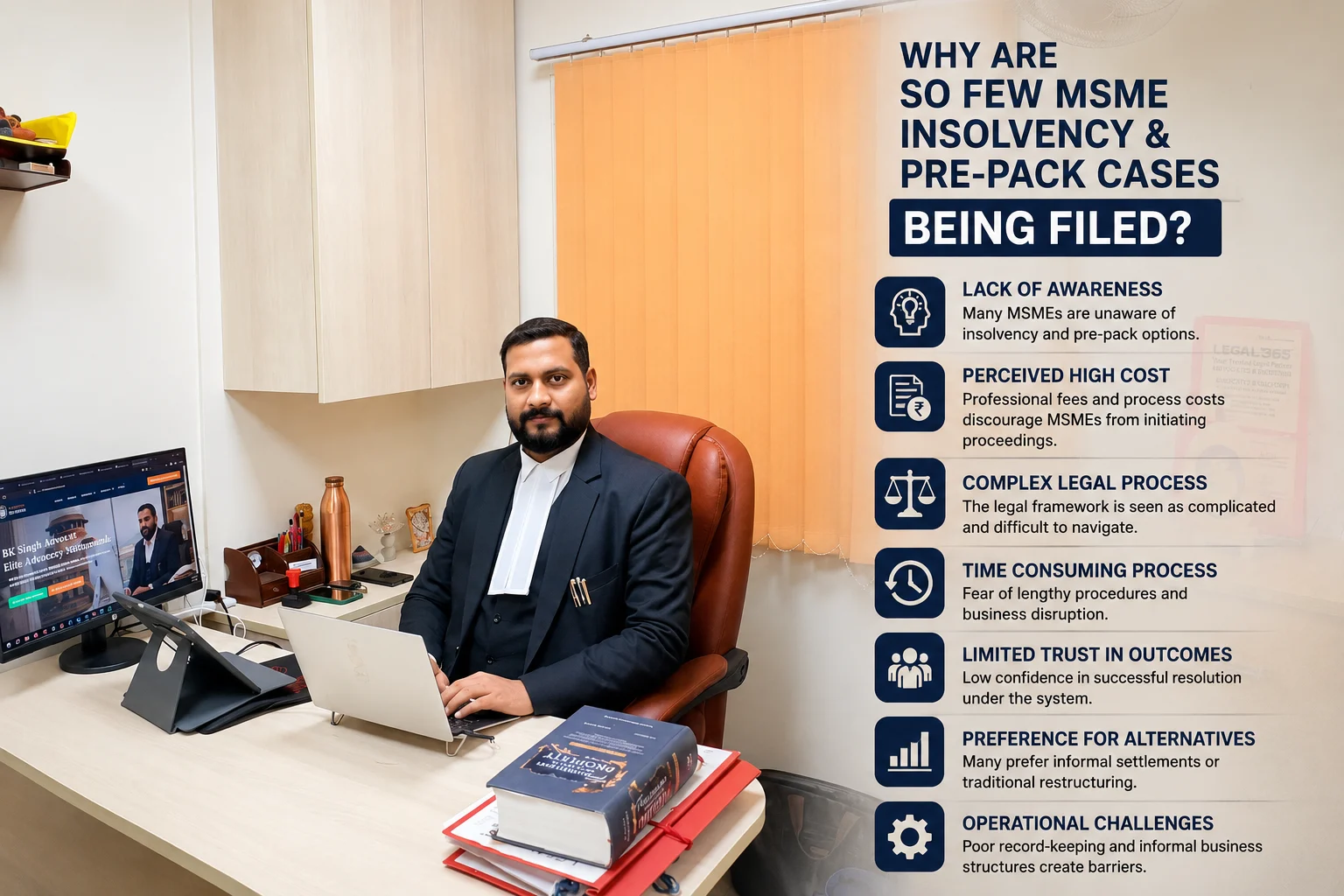
When an MSME owner fights their breaking point quietly. When salary becomes late, GST unpaid. When that big buyer doesn’t release payment for months. When bank calls turn into regularisation demands. When vendors start harassing Except that sometimes insolvency is the best option for a small business. That fear goes a long way towards explaining why MSME insolvency cases in India are so low. Here’s the thing. India has a pre-packaged insolvency process for MSMEs too. It’s called MSME Pre-Packaged Insolvency Resolution Process – abbreviated to PPIRP – under the Insolvency and Bankruptcy Code, 2016. Through the Covid relief window last year, India introduced a specific rescue process for viable MSME businesses to restructure debt without undergoing the full-trough of a normal Corporate Insolvency Resolution Process or “CIRP”. Official IBBI guides detail that MSME PPIRP was enacted through the Insolvency and Bankruptcy (Amendment) Ordinance, 2021 (the “2021 Amendment”) last year, and given rules and regulations via IBBI notifications in April 2021. PPIRP is meant to reduce time, preserve enterprise value, and protect small business interests. What’s crazy is that, despite this, literally a handful of MSME pre-pack insolvency cases have been filed or admitted for resolution so far. IBBI’s newsletter for Oct-Dec 2025 reports that only 17 applications under PPIRP had been admitted till 31 December 2025. One had been withdrawn. Resolution plans were approved in 10. That is not a glitch in the system. MSME insolvency represents a confluence of legal process, banker behavior, creditor consent, promoter psychology, documentary requirements, NCLT practice, and good business sense. Promoters don’t choose PPIRP because the law scares them. They don’t reach that point. This guide breaks down why MSME pre-pack insolvency case filings remain low in India. It explores what PPIRP for MSMEs actually means. It discusses where MSME debt restructuring sits within IBC law. It tells business owners when to speak with an MSME insolvency lawyer before it’s too late. The financial distress of MSME businesses in India does not present suddenly. A lot of small businesses run on tight-working capital cycles in Delhi NCR, Ghaziabad, Noida, Greater Noida, Gurugram, Faridabad, Meerut, Hapur, Lucknow, Kanpur, Jaipur etc, Mumbai-Pune-Bengaluru-Hyderabad- Chennai-Kolkata Ahmedabad belt etc. If payment is late from just one large buyer, it can cascade into GST payments missed, rent/payroll vendors simultaneously. Few will admit it publicly, but distressed MSME sales, income and payments often start coming late first from the worst buyer. One late person can knock out GST, EMI, vendor, salary and rent payments altogether. The bigger question is not why are MSME insolvency cases in India so low? The real question is why aren’t stressed MSMEs using a formal rescue mechanism if the law provides it? Insolvency is scary. Bankers may treat it as an adversarial process. Vendors may panic. Employees want job security. Families tell the promoter to “try talking” to the bank or “manage somehow”. By the time you speak to an insolvency lawyer, your MSME may have lost negotiating leverage. Under PPIRP, the law allows an eligible MSME to prepare a base resolution plan with creditor input while staying in control of the business, so long as the debtor fulfills statutory conditions and the resolution plan is approved. Informal IBBI Presentation slides described PPIRP as “a combination of debtor-in-possession feature with creditor control”. Though in practice, before you can file a PPIRP case, the creditor must be consulted. Financial records must be ready. A realistic base resolution plan must be built. And the promoter must first qualify under PPIRP eligibility rules. Most MSMEs fail at stage 1. If you’re an MSME owner looking for early legal advice, speaking to an MSME insolvency lawyer at MSME Lawyers can help you understand whether the situation is suitable for recovery, restructuring under PPIRP, out-of-court settlement, MSEFC proceedings, commercial litigation or insolvency related advice. MSME PPIRP stands for Pre-Packaged Insolvency Resolution Process for Micro, Small and Medium Enterprise Corporate Debtors. PPIRP is not available to all MSMEs automatically. They have to qualify as eligible debtors first. As per the Insolvency and Bankruptcy Code, 2016 (“IBC”), only eligible corporate debtors can file for MSME PPIRP. Section 54A, IBC guides us through eligible corporate debtor under PPIRP. Ideally, the creditor and promoters should have an honest discussion regarding debt restructuring before filing for PPIRP. IBBI reported only 17 MSME PPIRP applications admitted as on 31 December 2025 The base resolution plan is the key document in MSME pre-pack insolvency process. Normally, the reason you see so few cases are matters of awareness, creditor consent, and trust deficit. Not lack of distressed MSMEs. Pre-Pack Insolvency for MSME purposes means a law process under IBC wherein an eligible Micro, Small or Medium Enterprise Corporate Debtor (“MSME”) works on a resolution plan with creditor involvement before formally filing for such process at NCLT. The insolvency resolution process (“IRP”) is concluded on a pre-planned basis with creditor supervision and statutory approval. This definition is important because many SME owners misconstrue PPIRP with an informal loan settlement, private OTS program, MSEFC recovery case, or commercial litigation lawsuit. Each remedy is different. Misunderstanding MSME debt settlement and insolvency is common. One only settles debts with a specific lender or operational creditor. An MSEFC application allows MSMEs to sue buyers deferring payments to them. Commercial courts look at contract disputes. PPIRP provides restructuring relief to eligible MSMEs as corporate debtors. Know the remedy that suits your problem. A real estate project in Greater Noida may struggle with bank default, buyer dues and vendor anger all at once. Separating issues is part of the strategy. Maybe the buyers need to be sued for recovery. Maybe the bank can be negotiated with. Maybe PPIRP is feasible, or maybe its not. Contrast that with your local service provider in Noida who has one invoice in dispute, but whose business is not actually insolvent. Do they need PPIRP? Almost never. The mistake we see is treating every business problem as a “case”. Financial stress is not a diagnosis. See a professional first. Litigation should be a last resort. While MSME classification connects to the MSMED Act framework,MSME insolvency proceedings including PPIRP are primarily governed by the Insolvency and Bankruptcy Code, 2016 (IBC). Additionally, the IBBI PPIRP Regulations, 2021 and NCLT rules dictate the process. Section 54A of the Insolvency and Bankruptcy Code, 2016 (“IBC”) states that an application for initiating a pre-packaged insolvency resolution process (“PPIRP”) may be submitted concerning: a Micro, Small or Medium Enterprise (“MSME”) classified under Section 7(1) of the Micro, Small and Medium Enterprises Development Act, 2006 (“MSMED Act”) by way of a corporate debtor. This section further lists eligibility conditions such as no-pending CIRP, no-pending liquidation and eligibility to submit a resolution plan under Section 29A. What about procedural law for PPIRP? Section 54C deals with application for initiation of pre-packaged insolvency resolution process to Adjudicating Authority. In case of corporate insolvency, NCLT is the authority. India Code lists Section 54C as “Application to Adjudicating Authority for initiation of pre-packaged insolvency resolution process.” For all intents and purposes, the legal framework could include: What’s more, IBBI’s own discussion paper in 2026 highlights PPIRP documentation remains a work in progress. The Paper refers to modified information required with request to initiate PPIRP process. This attempts to simplify previous requirements which included declarations regarding avoidance transactions, transactions defrauding creditors etc which created difficulties for MSME Corporate Debtors to file for PPIRP. The point is, the regulator understands the filing numbers are low because of practical hurdles. Let’s get one thing straight. The PPIRP route under IBC works well if given a chance. Filing for PPIRP is not a casual business decision. It requires advance preparation, documentation and restructuring merit. Here’s why promoters don’t use it: Go to any commercial centre in Delhi NCR and ask ten shop owners if they know about cheque bounce cases pending against them. Go to industrial areas in Kanpur, Lucknow, Varanasi or Faridabad. Ask ten proprietors if they have received a GST notice this week. Odds are high more than five will raise their hands. Ask them about PPIRP for MSMEs. Now. You’ll struggle to get a response, let alone an accurate answer. PPIRP does not sound like a debt solution to the troubled businessman. It sounds like debt last resort. Bankruptcy. To start, I haven’t seen one promoter discuss an informal restructuring or settlement with creditors without fearing “INSOLVENCY” was going to be filed against them by someone. Periodically, I still get clients who believe lawyers file “INSOLVENCY” on day one. Even if the lawyer informs them it won’t, the damage is done. By the time entrepreneurs consider PPIRP as an option, someone has already moved an aggressive bank, or the book keeping is so bad that no proposed base resolution plan would fly. Half of the education battle is winning that perception war. This criteria kills the applicant pool immediately. Most Micro and Small businesses in India operate as proprietorships, partnerships or as informal units. Your local shop and trading concern in Delhi/Hapur/Ghaziabad/Noida/ Meerut are classified MSMEs for doing business purposes. But that doesn’t make them eligible for MSME insolvency under IBC. Lower possible filings number two. Good number of genuine small businesses in Meerut, Hapur, Faridabad or Kanpur might be insolvent. Their books are a mess, creditors are shouting, they have outstanding bank loans etc. But they’re not “corporate” MSMEs by definition. PPIRP isn’t meant for them. These units may still require recovery, restructuring, settlement negotiation, arbitration, commercial litigation or ordinary MSEFC recovery cases from lawyers. But that process is different from PPIRP. To recover late payments from buyers, MSME vendors usually file MSEFC arbitration and conciliation cases against buyers instead of insolvency or bankruptcy filings. Guess what happens when parties can’t agree on terms before a case files? Creditors will not agree to PPIRP out of the blue. Banks will ask questions. NBFCs will consult higher-ups. Supply vendors will doubt your ability to pay at all. Operational creditors want payments, not promises. Yet promoters start assuming they can walk into NCLT office and “do a PPIRP”. They’re wrong. Don’t have creditor support? Then PPIRP cannot begin till you do. File for MSME insolvency, and suddenly suppliers will stop credit, employees jump ship, competitors celebrate, buyers further delay payments, and the bank will black list you. It happens. Especially in family businesses where reputation matters on a emotional level. Proceeding begins at “NCLT”. Immediately, that word sticks. While the intent of PPIRP is to allow promoter control versus appointed insolvency professional control in ordinary CIRP, fear of stigma stops many MSME owners from using the process early. Truth is, fear can be rational sometimes. Filing carelessly hurts negotiation posture. If your creditors smell blood, a vague restructuring proposal won’t cut it. But avoiding the issue of bad debt doesn’t make it go away. Solution is neither rushing towards PPIRP, nor pretending overdue payments and GST arrears don’t exist. Solution is reviewing distress early, getting your documents in order, and understanding whether PPIRP, settlement or some other remedy is suitable for the situation at hand. Let me ask you this: do your MSME Accounts reflect IBC ready documentation? Vendor ledgers align with bank deposit evidence? Perfect. Interest loan taken from your cousin two years ago, with conditions verbally discussed? Not so much. GST returns match exactly what’s shown on your books? Good. You’re done… The PPIRP requires preparation. Which is great for creditors. Not so great if your MSME didn’t prepare for rescue. Even IBBI acknowledged this point. Their own 2026 discussion paper mentioned difficulties faced by MSMEs in filing for PPIRP because of the documentary requirements, then goes on to propose streamlining documentation obligations under PPIRP. Good lawyers don’t ask, “Can we file?” The smarter question is, “Can we file without getting destroyed during the examination of documents?”. Hint: You’ll need documents that can survive judicial scrutiny. Small business owners facing payment defaults or financial distress. Bankers, suppliers and financial creditors who want recover outstanding payments from MSMEs. Promoters, directors, existing partners, worried CFOs, accountants of an MSME fit this category. So does your debtor. If your MSME supplier is struggling to pay you, you should know about this too. The business could be your sole proprietor shop facing bank payments every month in Delhi NCR. It could be your manufacturing unit in Ghaziabad where vendor dues and buyers non-payment have collided. Or your tech startup in Bengaluru which is struggling to pay salaries because your bridge funding hasn’t materialized. It applies to the lender too. When your MSME debtor is defaulting, you should know if PPIRP is a genuine rescue tool or just a delaying tactic before writing the account off. MSME insolvency is just one business solution. Some situations require urgent commercial court assistance. Don’t waste time filing in the wrong forum. The MSME Pre-Pack Insolvency Resolution Process starts even before a case physically files at NCLT. Promoters should review eligibility, financial viability, documentation, connect with creditors and consider which resolution professional to approach first. Resolution plan is key too. It must be approved before you can file. The trick to proper PPIRP analysis is having correct documents. If your books are in disarray or key information is missing, even a legally eligible MSME may have trouble during creditor negotiations or NCLT admission. Standard documents include: This list changes based on business structure. Don’t give your lawyer a reason to avoid asking tough questions. If there are skeletons in your business closets, tell your lawyer. Unknown facts aren’t your counsel’s problem. Unknown but plaguing facts are your problem if they come up later. The entire pre-pack process is meant to be faster than normal CIRP. IBBI mentions in MSME presentation slides that “PPIRP aims to provide quicker resolution through base resolution plan which may be approved within 120 days.” No. 120 days does not mean magic fixes your business stress in 4 months. Filing for PPIRP starts weeks, sometimes months before you reach NCLT. Creditor negotiations take time. Bank approvals take time. lBC timelines come into effect only after you file at NCLT. Practically speaking, separating panic from procedure is step one. Separate process into 4 parts. Ignoring the problem until NCLT or RBI initiatives appear doesn’t make it go away. Urban districts like Delhi NCR have MSME lawyers in Ghaziabad or MSME lawyers in Gurugram that specialize in MSME recoveries. Use a localized search if you’re located outside these cities. MSME Lawyers can assist MSME owners, directors, suppliers and creditors in assessing whether the matter calls for pre-pack insolvency, debt restructuring, settlement, recovery action, commercial court proceedings, MSEFC strategy or broader dispute resolution. Advocate BK Singh focuses on practical legal assessment rather than pushing every matter into NCLT. That matters because PPIRP is not suitable for every MSME dispute. Some cases need buyer recovery. Some need bank negotiation. Some need settlement documentation. A few may genuinely need MSME Pre-Packaged Insolvency Resolution Process review. The legal support may include document review, creditor-position analysis, demand and notice strategy, high-level PPIRP eligibility review, recovery route comparison, negotiation support and representation planning. For readers searching by location, the lawyers by city section can help connect the issue with local service relevance across major Indian business regions. MSME insolvency cases are low because many MSMEs are not structured as corporate debtors, promoters fear stigma, awareness is limited, creditor approval is difficult, and documentation for PPIRP needs serious preparation. Many stressed MSMEs choose informal settlement, OTS, recovery defence or business closure instead. MSME pre-pack insolvency is a formal IBC process for eligible corporate MSMEs where a base resolution plan is prepared with creditor involvement before NCLT filing. It aims to preserve business value while giving creditors statutory oversight. No. PPIRP is not available for every MSME automatically. It applies to eligible corporate debtors classified as MSMEs, subject to conditions under the IBC. Proprietorships and non-corporate business structures may need other legal remedies. PPIRP is not popular because of low awareness, creditor consent challenges, promoter fear, limited professional familiarity, documentation burden and uncertainty about practical outcomes. Many lenders and MSME owners still prefer private restructuring or settlement. PPIRP follows a debtor-in-possession model with creditor supervision. This means the promoter may continue managing the business, subject to IBC safeguards and creditor oversight. Control is not absolute and can change if statutory conditions justify intervention. A base resolution plan is the promoter’s restructuring proposal placed before creditors under the PPIRP framework. It must be commercially realistic and legally compliant. A weak or vague plan can reduce creditor confidence. No. IBC restructuring does not guarantee relief. Outcome depends on eligibility, creditor approval, business viability, documentation, NCLT scrutiny and the commercial quality of the proposal. It depends on the facts. If the issue involves one lender or a manageable debt, settlement may work. If the business needs a wider statutory restructuring and is eligible, PPIRP may be reviewed. A legal and financial assessment should come first. Creditors may explore IBC remedies where legal conditions are satisfied. A corporate MSME facing creditor pressure should review notices, default amounts, documents and possible settlement or restructuring options quickly. Consult an MSME insolvency lawyer when defaults begin, creditor pressure increases, bank notices arrive, or restructuring becomes necessary. Early advice gives more options than late-stage emergency action. Few MSME insolvency and pre-pack cases are being filed because the law is only one part of the story. Business structure, creditor confidence, promoter fear, documentation, banking practice and awareness all shape the final decision. PPIRP for MSMEs can be useful, but only for the right case. It should not be treated as a panic button. A viable business with credible records and cooperative creditors may benefit from a careful review. A poorly prepared filing can do more harm than good. For MSME owners in India, Delhi NCR and major business cities, the better approach is early legal diagnosis. Check the debt position. Review the documents. Compare settlement, recovery, MSEFC, commercial court and insolvency options. Then choose the route that protects business value with legal discipline. For MSME insolvency, PPIRP review, recovery strategy or restructuring guidance, consult MSME Lawyers and Advocate BK Singh for a practical case-specific assessment. This article is for general information only and does not constitute legal advice.WHY ARE SO FEW MSME INSOLVENCY CASES IN INDIA FILED?
Table of Contents
Table of Contents
Why This Topic Concerns MSME Owners in India, Delhi NCR/Gurugram/Hapur & Other Cities 2026
Quick Facts on India’s MSME Pre-Pack Insolvency Cases 2025
What Is MSME Pre-Pack Insolvency Explained?
What Legal Framework Applies to MSME Insolvency/PPIRP in India?
Why Are So Few MSME Insolvency Cases Filed in India?
1. Most MSME Owners Are Unaware of PPIRP
2. PPIRP is for Corporate MSMEs. Not All Small Businesses Qualify
3. Creditors are not obligated to consent to MSME PPIRP filing
4. Promoters Think Filing for MSME Insolvency Ruins Reputation
5. Document requirements deter small companies from filing for MSME insolvency
Who Needs This MSME Pre-Pack Information?
How Does MSME Pre-Pack Insolvency Process Typically Proceed?
Documents and Evidence Needed for MSME PPIRP Analysis
What Timelines, Deadlines and Important Windows Should MSME Owners Know in Pre-Pack Insolvency?
How MSME Lawyers Can Help MSMEs Assess PPIRP and Debt Restructuring
Frequently Asked Questions
1. Why are MSME insolvency cases in India so low?
2. What is MSME pre-pack insolvency?
3. Is PPIRP available for all MSMEs?
4. Why is PPIRP not popular in India?
5. Can an MSME promoter remain in control during PPIRP?
6. What is a base resolution plan in PPIRP?
7. Does MSME debt restructuring under IBC guarantee relief?
8. Should an MSME choose settlement or insolvency?
9. Can creditors file IBC cases against MSMEs?
10. When should I consult an MSME insolvency lawyer?
Final Thoughts
Disclaimer
There's no reason for concern. There is no difficult-to-understand legalese.
Someone who has helped many people with the same problems gives you clear, honest advice. We want to make the legal process easy to understand and use for everyone.